.svg)

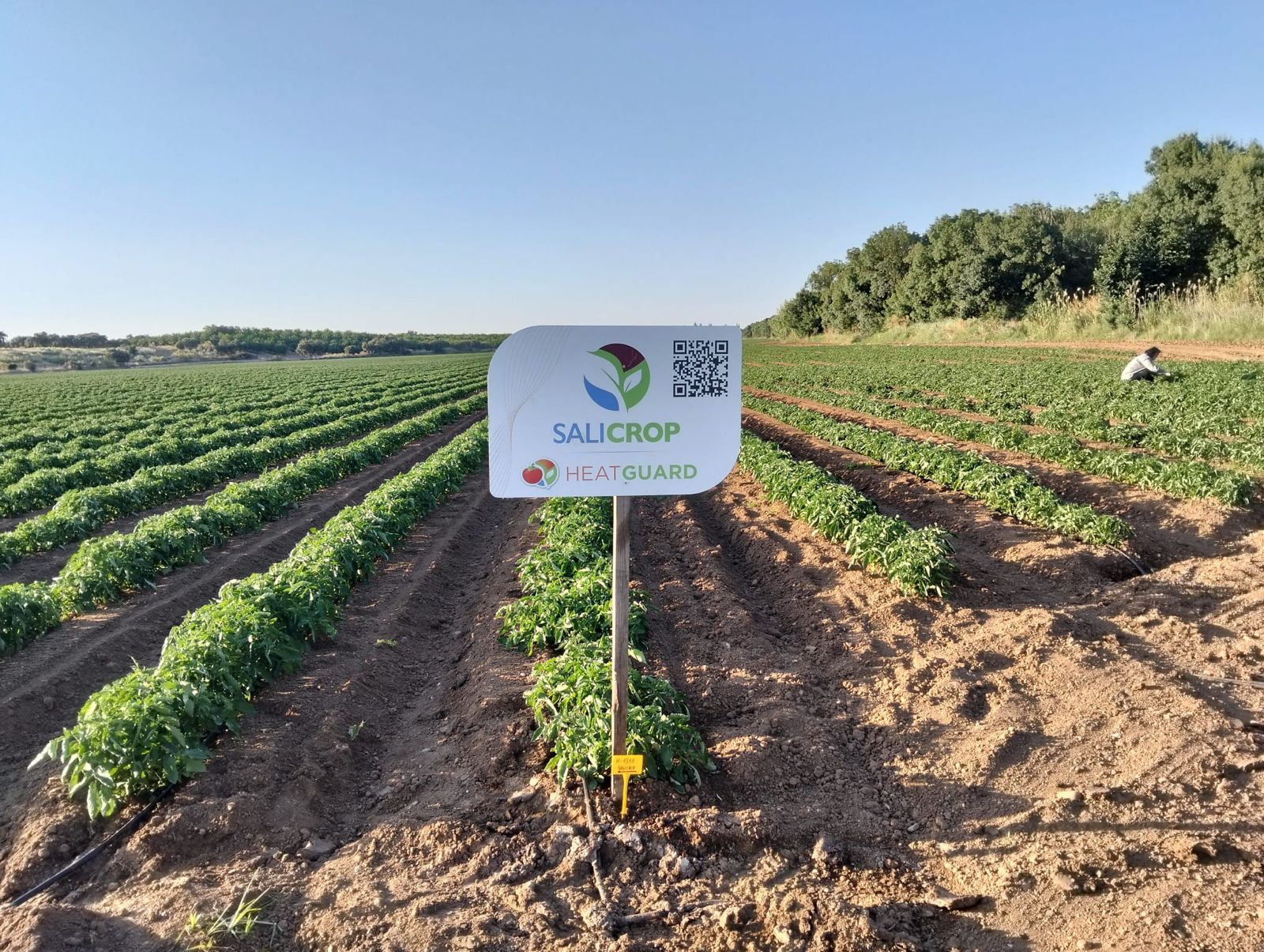
In 2025, Spain delivered one of the toughest processing tomato seasons in recent memory, and that is exactly why this year matters.
Salicrop’s non-GMO seed treatment for improving resistance to abiotic stresses is designed for moments like this: when heat, salinity, and water limitations threaten both yield and factory quality. And in 2025, it did more than protect productivity, it helped increase lycopene production, a key quality parameter with direct value to processors and brands.
Why 2025 was the “stress test” sustainability teams look for
Sustainability and procurement teams don’t need proof under ideal conditions, they need validation under the scenarios climate targets are built to address.
In Extremadura, the 2025 season created a perfect storm:
Repeated heatwaves
Daytime temperatures repeatedly reached 35–40°C during flowering and fruit set. Night temperatures frequently stayed above 21°C, well above the threshold where tomato reproduction starts to fail.
Physiological stress
Across the region, this drove classic heat-stress symptoms:
- Flower abortion
- Reduced fruit set
- Quality volatility (especially color, Brix, and defects)
Under these conditions, quality metrics, particularly lycopene, often drop. Yet the commercial fields treated with Salicrop showed the opposite trend: lycopene increased while quality stayed stable.
The headline: higher lycopene under extreme heat
Lycopene is more than a nutritional metric. It is central to:
- color intensity and product consistency
- processing efficiency and blending requirements
- premium positioning in end-products
Across 2025 commercial deployments, Salicrop-treated fields showed significant lycopene gains, alongside stable factory parameters.
2025 commercial results: three real farms, measurable outcomes
1) Aldea del Conde (Variety: H1311)
A strong demonstration of “quality + cleanliness” under stress:
- +22% yield: 106.8 vs 87.4 t/ha
- +13.6% lycopene
- –43% rotten fruits
- Brix, color, and pH stable (within factory specs)
When extreme heat creates defects, lowering rots can be as valuable as increasing tonnage because it protects both revenue and factory intake efficiency.
2) Los Cominos
A case of stability + quality lift:
- +2.5% yield maintained (in a season when many fields dropped sharply)
- +25% lycopene increase
- +2–8% improvement in Brix and color
This is the kind of outcome processors want: consistency, with extra quality upside.
3) La Albuera (Grower: Juan Muñoz)
Balanced yield improvement with stable processing performance:
- +14% yield: 69.2 vs 60.9 t/ha
- Quality parameters stable
What this means for processors and value chains
In processing tomatoes, the goal isn’t only “more yield.” It’s more usable yield with predictable specs. The 2025 season showed that seed-applied resilience can support:
- higher lycopene (color and consistency value)
- lower defects (less rot, better intake)
- stable Brix / pH / color (less blending and rework)
- more reliable deliveries under climate volatility
In other words: climate resilience becomes a controllable variable, not a yearly gamble.
Why this matters for sustainability targets
When yields and quality collapse under stress, growers often respond with higher water demand, more inputs, and higher risk. By stabilizing performance under heat stress, seed treatment can support:
- water efficiency (maintaining productivity under water constraints)
- emissions reduction (less replanting, fewer corrective operations)
- farmer prosperity (more sellable yield + quality premiums)
These are exactly the outcomes sustainability strategies aim to scale by 2030, but they need proof under real stress. 2025 delivered that.
What’s next
We’re now expanding commercial conversations with processors, seed partners, and value-chain leaders looking to secure quality and lycopene consistency under increasing heat volatility.
If you’re planning acreage and want to explore a commercial deployment, we’d love to talk: contact@salicrop.com