.svg)


Del rendimiento al impacto: Cómo Salicrop transforma la eficiencia agrícola en sostenibilidad medible
Sostenibilidad impulsada por la productividad
A menudo, la sostenibilidad en la agricultura se entiende solo como la reducción de insumos: menos fertilizantes, menos agua y menos productos químicos. Sin embargo, en la práctica, los agricultores operan bajo estrictas limitaciones económicas que hacen que reducir estos recursos no siempre sea viable ni deseable.
En Salicrop, abordamos la sostenibilidad desde un ángulo distinto. En lugar de exigir a los productores que cambien drásticamente sus prácticas, nos enfocamos en una palanca mucho más poderosa: optimizar la eficiencia de producción utilizando los mismos insumos.
La premisa clave: La sostenibilidad se mide por tonelada, no por hectárea
La mayoría de las evaluaciones ambientales en el sector miden el impacto por hectárea (la cantidad de carbono emitida por campo). Sin embargo, este enfoque ignora una dimensión fundamental.
Si dos campos utilizan la misma cantidad de recursos, pero uno logra un mayor rendimiento, el resultado es claro:
- El impacto ambiental por hectárea se mantiene igual.
- El impacto por tonelada de alimento producida disminuye.
Aquí es donde Salicrop aporta su mayor valor. Según nuestro último análisis de campo, basado en la metodología LCA (Análisis de Ciclo de Vida) certificada por la norma ISO 14040:
- Las prácticas agrícolas se mantuvieron idénticas entre las semillas de control y las tratadas con Salicrop.
- Los niveles de insumos (agua, fertilizantes y operaciones) no variaron.
- El rendimiento aumentó significativamente en los campos tratados.
En consecuencia, las emisiones de CO₂ por tonelada de producto disminuyeron. En términos sencillos: producimos más alimentos con la misma huella ambiental.
Eficiencia de carbono sin alterar la operación
Este hallazgo tiene implicaciones directas para el sector. Salicrop no se limita a reducir emisiones absolutas por superficie, sino que mejora la eficiencia de carbono por tonelada producida.
Esto crea una nueva categoría de impacto climático que destaca por su simplicidad:
- Sin necesidad de insumos adicionales.
- Sin cambios en el comportamiento del agricultor.
- Sin complejidad operativa.
El resultado es una reducción real del CO₂ por unidad de producto, una mejor utilización de los recursos y una mayor productividad, incluso en condiciones de estrés ambiental.
Un ejemplo práctico: Cultivo de tomates
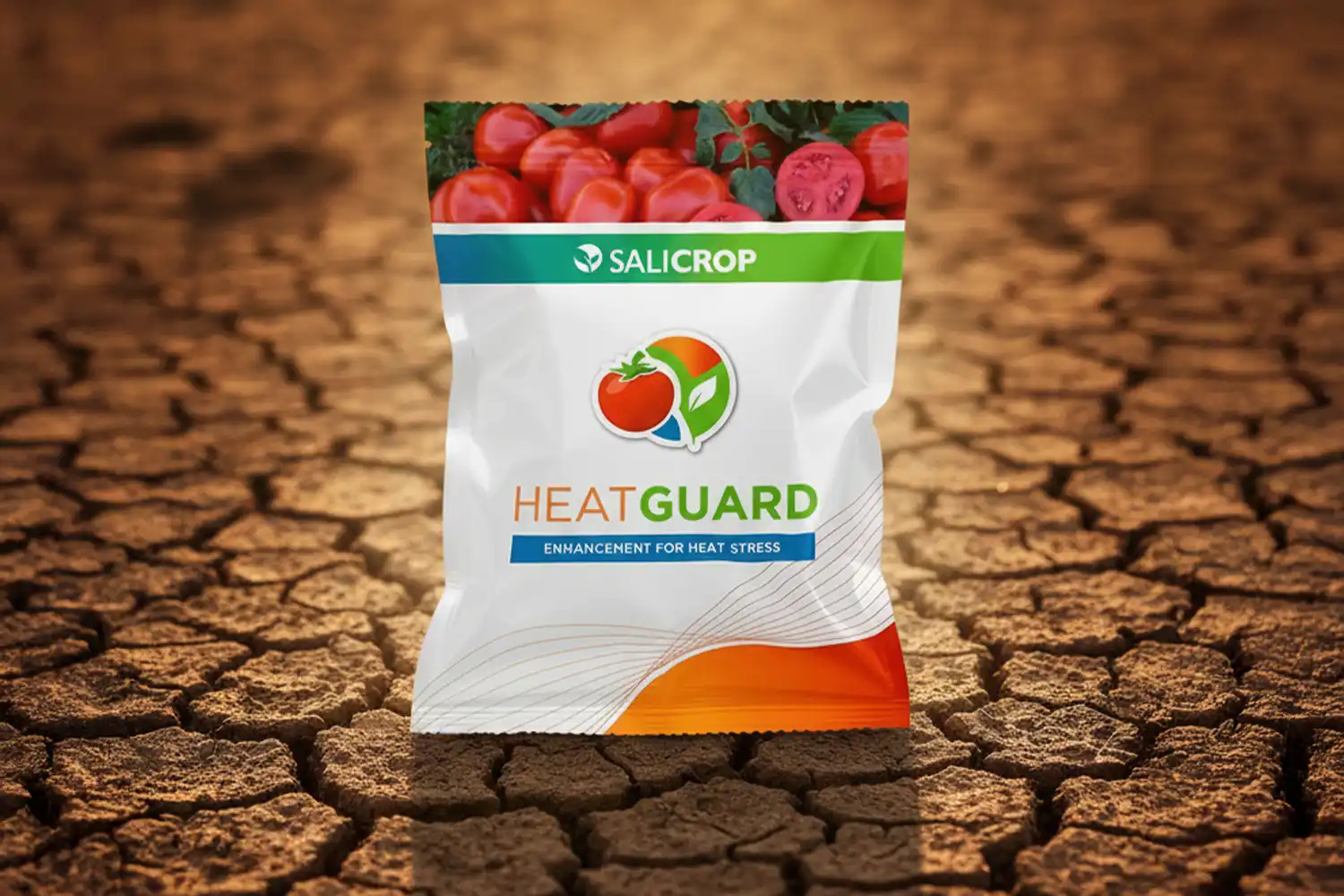
En pruebas realizadas en campos comerciales de tomates, aplicamos prácticas agronómicas idénticas en parcelas tratadas y de control. Mientras que el impacto ambiental por hectárea fue el mismo en ambas, las semillas tratadas generaron un rendimiento superior. Esto se tradujo en una reducción medible de la huella de carbono por cada tonelada cosechada. Incluso las mejoras moderadas en la producción generan ganancias significativas en sostenibilidad.
Por qué esto es vital para la cadena de valor alimentaria
Hoy en día, el sistema alimentario global pone el foco en las emisiones de Alcance 3 (aquellas generadas en el origen, a nivel de finca). Esto plantea un desafío: ¿cómo pueden las empresas reducir sus emisiones sin imponer cambios difíciles de ejecutar a los agricultores?
Salicrop ofrece una respuesta directa:
- Para las empresas de alimentos: Menor intensidad de carbono en sus materias primas y avance hacia metas climáticas sin interrumpir la cadena de suministro.
- Para las empresas de semillas: Una oferta diferenciada con valor sostenible intrínseco, alineada con las normativas ESG.
- Para los inversores: Un modelo escalable donde el beneficio económico y el impacto ambiental caminan de la mano.
Más allá del carbono: Una visión integral de la eficiencia
Aunque el carbono es la métrica estrella, este principio de eficiencia se extiende a otros recursos vitales:
- Uso óptimo del agua.
- Aprovechamiento de nutrientes.
- Productividad del suelo.
Al fortalecer la resiliencia de las plantas ante el estrés abiótico (calor, salinidad y sequía), Salicrop permite que los cultivos prosperen en las condiciones reales del campo actual.
Una nueva categoría: Sostenibilidad impulsada por la productividad
Tradicionalmente, las soluciones de tecnología agrícola (AgTech) se dividen en dos: las que aumentan el rendimiento o las que reducen el impacto ambiental. Salicrop logra ambas metas simultáneamente a través de un mismo mecanismo. Definimos esto como Sostenibilidad impulsada por la productividad.
Conclusión
La sostenibilidad agrícola no tiene por qué ser enemiga de la rentabilidad. Con Salicrop, el sistema gana en todos los niveles: los agricultores producen más, las empresas reducen su intensidad de carbono y el sistema alimentario se vuelve más eficiente.
Mayor rendimiento. Mismos insumos. Menor impacto por tonelada.
Mirando hacia el futuro A medida que evolucionan marcos regulatorios como la CSRD y los objetivos climáticos globales, las soluciones medibles y escalables definirán el futuro del campo. Salicrop se posiciona en la intersección de la agronomía, la tecnología climática y la sostenibilidad basada en datos.
¿Le interesa integrar a Salicrop en su estrategia de sostenibilidad? Póngase en contacto con nosotros para explorar alianzas, programas piloto o colaboraciones de datos.