.svg)

Executive Summary
Heat stress has become the primary limiting factor in open-field vegetable production across Southern Europe - and increasingly worldwide. Traditional reactive solutions like irrigation, shade nets, and post-emergence biostimulants are no longer sufficient against permanent climate variability. A new category is emerging: seed-level abiotic stress resistance through non-GMO seed enhancement. This proactive approach builds plant resilience before planting, delivering 15–25% yield increases under heat stress conditions while reducing irrigation dependency.
The Heat Crisis Reshaping Vegetable Production
For generations, farmers have responded to extreme heat with the same toolkit: more water, shade infrastructure, and adjusted planting calendars. Across Spain, Italy, and Portugal-Europe's vegetable production heartland - this toolkit is failing.
Open-field crops now face high soil temperatures during germination, heat stress during flowering and fruit set, reduced yield stability, and declining processing quality. The impact is most acute in processing tomatoes, where Europe holds global market leadership and where heat-related losses translate directly into contract reliability issues across the value chain.
The pattern is not limited to Europe. Latin America, India, and the southern United States are facing parallel pressures, with Southern Europe serving as the climate frontline where solutions are tested first.
Why Reactive Solutions Are Reaching Their Limit
Most current responses to heat stress share a common weakness: they act after physiological damage has already begun.
Irrigation cools soil but consumes a resource that is increasingly scarce in Mediterranean climates. Biostimulants applied after emergence cannot reverse the cellular damage that high temperatures cause during germination and early development. Adjusted planting schedules push growing seasons into narrower windows, increasing operational complexity without addressing root causes.
The result is a system that is expensive, water-intensive, and unable to deliver the yield stability that processors and food companies require for long-term contracts.
A Category Shift: From Field Intervention to Seed-Level Performance
A new approach is gaining commercial traction: pre-conditioning seeds before planting to activate the plant's natural stress-response pathways. Rather than fighting heat stress in the field, this method builds resilience at the seed level-before stress begins.
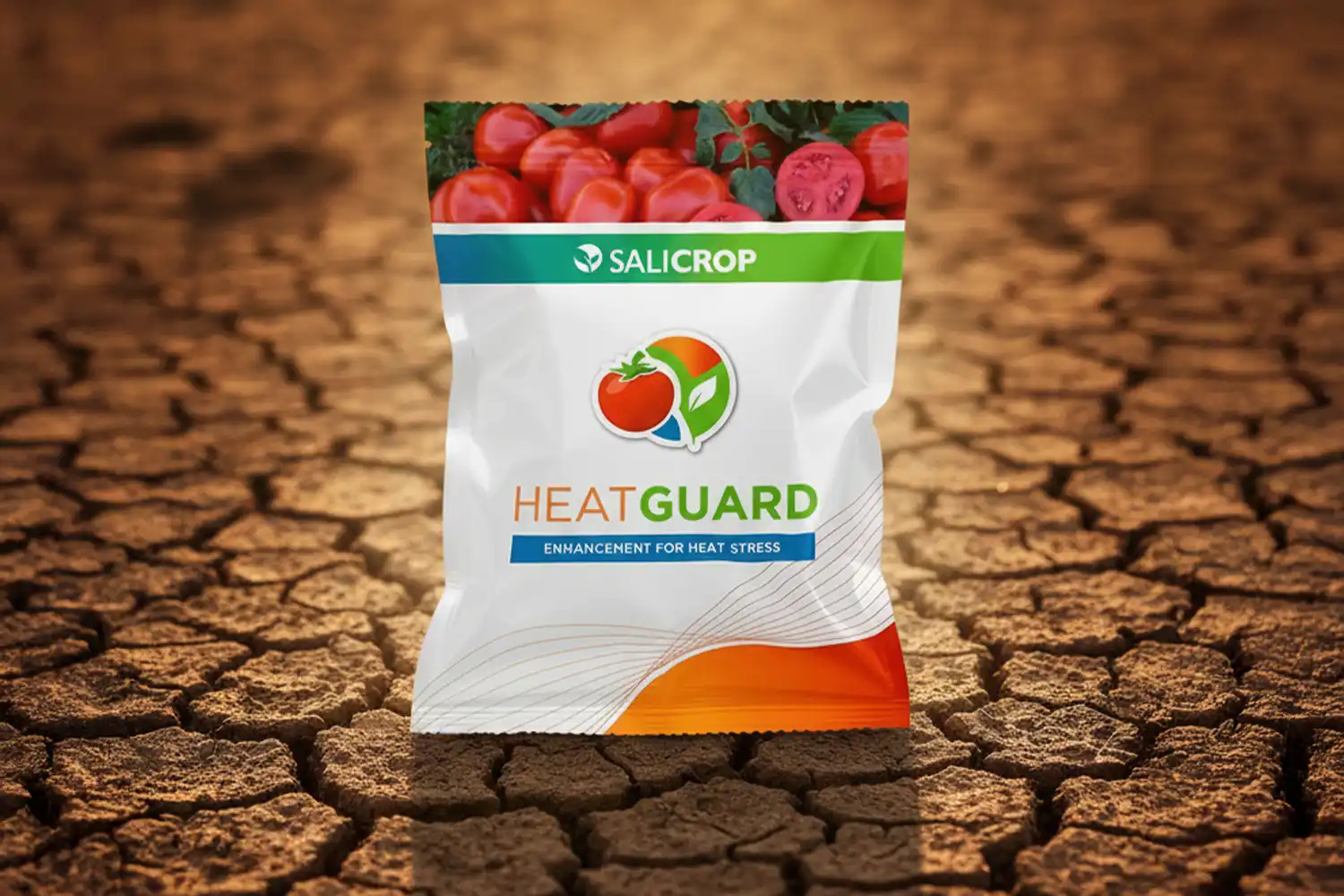
Salicrop's proprietary non-GMO wet chemistry process gently stimulates these natural pathways without altering the seed's genetics. The treatment integrates into existing seed and coating workflows, requires no change in farmer practices, and preserves the original variety's commercial identity.
The distinction matters. Genetic modification faces regulatory and market barriers, particularly in Europe. Post-emergence biostimulants act too late to prevent germination-stage damage. Seed enhancement sits in a different category-proactive, genetics-preserving, and compatible with existing supply chains.
What the Data Shows
Field and commercial results from heat-stressed regions consistently show:
- 15–25% yield increase under heat stress conditions
- Improved germination uniformity in high-temperature soils
- Reduced dependency on irrigation during peak heat periods
- Better processing quality metrics, including lycopene content in tomatoes
- Stable performance on marginal lands previously considered unproductive
These outcomes have moved seed enhancement from pilot status to commercial scaling, particularly in Spanish processing tomato production.
Why This Matters for European Agriculture
The shift toward seed-level resilience aligns with four converging European priorities:
Climate adaptation. The approach supports EU Green Deal objectives and member-state climate resilience strategies by reducing crop vulnerability without expanding land use.
Water efficiency. In water-scarce Mediterranean regions, reducing irrigation dependency is no longer optional. Seed enhancement directly addresses the water-yield equation.
Scope 3 emissions. Food companies under increasing sustainability disclosure requirements can improve supply-chain resilience without asking farmers to change practices - a critical factor for adoption.
Funding alignment. The technology fits funding frameworks including Horizon Europe, the LIFE Programme, and the EIC Accelerator, accelerating commercial deployment.
Europe as a Global Validation Platform
Southern Europe's role extends beyond its own market. Solutions proven against Mediterranean heat and salinity conditions translate directly to the agricultural challenges of Latin America, India, and the southern United States. Europe is becoming not just a market - but a validation platform for the future of climate-resilient agriculture.
Strategic Considerations for Adoption
For growers, processors, and seed companies evaluating climate-resilient seed enhancement, three considerations matter most.
First, identify where heat stress is already causing measurable losses-specific crops, specific fields, specific stages of the growing cycle. Quantification creates the baseline against which to measure improvement.
Second, prioritize varieties and contracts where yield stability has the highest commercial value. Processing tomatoes, where contract reliability drives processor relationships, are a natural starting point.
Third, plan for measurement. Untreated control plots, consistent monitoring of germination, vigor, fruit set, and final yield, and quality metrics aligned with processor specifications turn pilots into reliable adoption decisions.
The Competitive Picture
Reactive solutions are no longer sufficient. Water is no longer scalable. Climate variability is permanent.
The next generation of agricultural competitiveness will be defined by resilience designed at the seed level. Companies that adopt this approach early gain yield stability, supply-chain reliability, and meaningful differentiation in increasingly volatile markets. Those that don't will absorb the cost of that volatility.
Frequently Asked Questions
What is climate-resilient seed enhancement and how does it help combat heat stress?
Climate-resilient seed enhancement is a non-GMO wet chemistry process that primes seeds to activate their natural stress-response pathways before planting. The proactive treatment allows plants to better withstand environmental challenges including extreme heat, leading to improved germination, survival, and yield in open-field vegetables.
How quickly do farmers see results from enhanced seeds?
Improved germination uniformity and early seedling vigor are typically visible shortly after planting. Yield benefits become measurable during periods of environmental stress through the growing season, with field results showing 15–25% yield increases under heat stress conditions.
How does Salicrop's process differ from genetic modification?
Salicrop's process activates the plant's existing stress-response mechanisms without altering its genetics. The seed retains its original variety identity and regulatory status, making it compatible with markets where GMO solutions face regulatory or consumer barriers.
What mistakes should farmers and processors avoid when addressing heat stress?
The most common pitfall is over-relying on reactive interventions - excessive irrigation, shade infrastructure, or post-emergence biostimulants-while neglecting the foundational resilience of the seed itself. These approaches act after physiological damage has begun and become increasingly costly as water becomes scarce.
Can seed enhancement improve yields on marginal lands?
Yes. By enabling seeds to perform under heat, salinity, and drought conditions, climate-resilient seed enhancement can stabilize and increase yields on lands previously considered unproductive. This expands viable agricultural area without requiring new land conversion - a meaningful contribution to food security.
How does seed enhancement integrate with existing operations?
The treatment is fully compatible with standard seed processing lines, coating workflows, and farmer practices. No change is required at the farm level, which is a significant factor in scaling commercial adoption across processors and grower networks.